

Every club knows the email. A class has to be cancelled, a teacher is ill, the hall is double-booked, and by the evening there is a message in the inbox that starts politely and ends with "so I'd like a refund for tonight please". Multiply it by a class of twenty and a wet winter term, and handling the money around cancellations becomes a genuine part-time job, done in the least friendly medium ever invented.
Tempo Book It takes a different default: credit. When a session is cancelled, the money stays in the club as credit on the family's account, and it spends itself against the next booking. This post is about why we made that the default, and about the machinery underneath that keeps it fair, because credit is only friendlier than refunds if it is done properly.
Why refunds turn friendly conversations sour
A refund is not one task; it is five. Someone has to find the original payment, work out what was actually paid for that one session out of a term package, push the refund through the card processor, wait days for it to land, and then answer the follow-up asking where it is. Card processors keep their fees either way, so the club loses money on a transaction it never wanted. And the parent's experience is a week of mild suspicion over £7.50.
The maths is usually the worst part. What is one Tuesday worth when a family paid a half-term package rate, joined two weeks late, and used £5 of credit at checkout? Whatever the office answers under pressure, somebody can dispute. Money conversations between clubs and families go wrong exactly here, not because anyone is dishonest, but because nobody agrees on the arithmetic.
What credit does instead
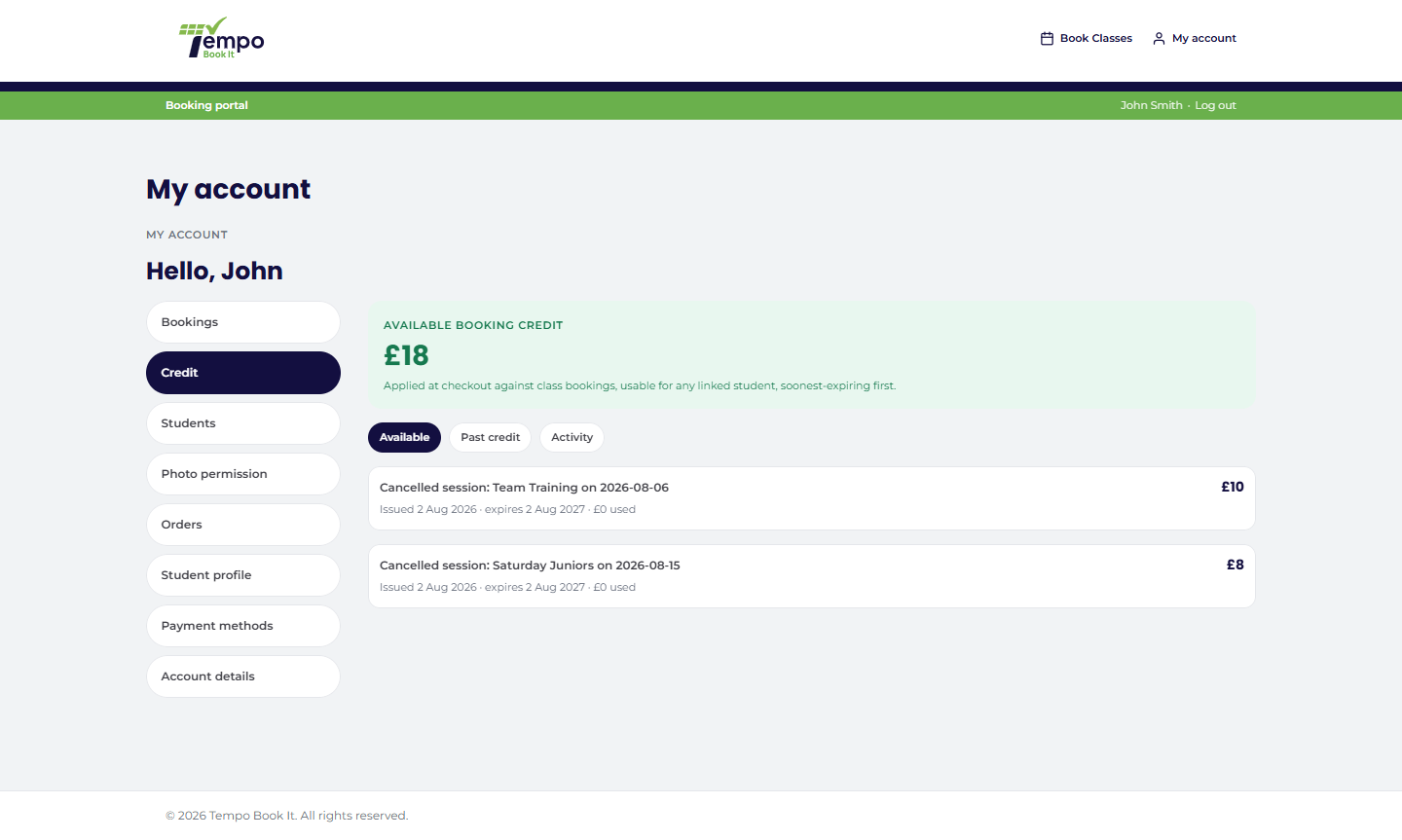
In Tempo Book It, a cancelled session becomes credit on the account automatically, and the amount is calculated by the system as what was actually paid for that session, package pricing, late joining and any credit already used all accounted for. Not the list price, not an estimate under pressure: the paid price, from the payment records. There is nothing for anyone to argue about, because there is no judgement call in it.
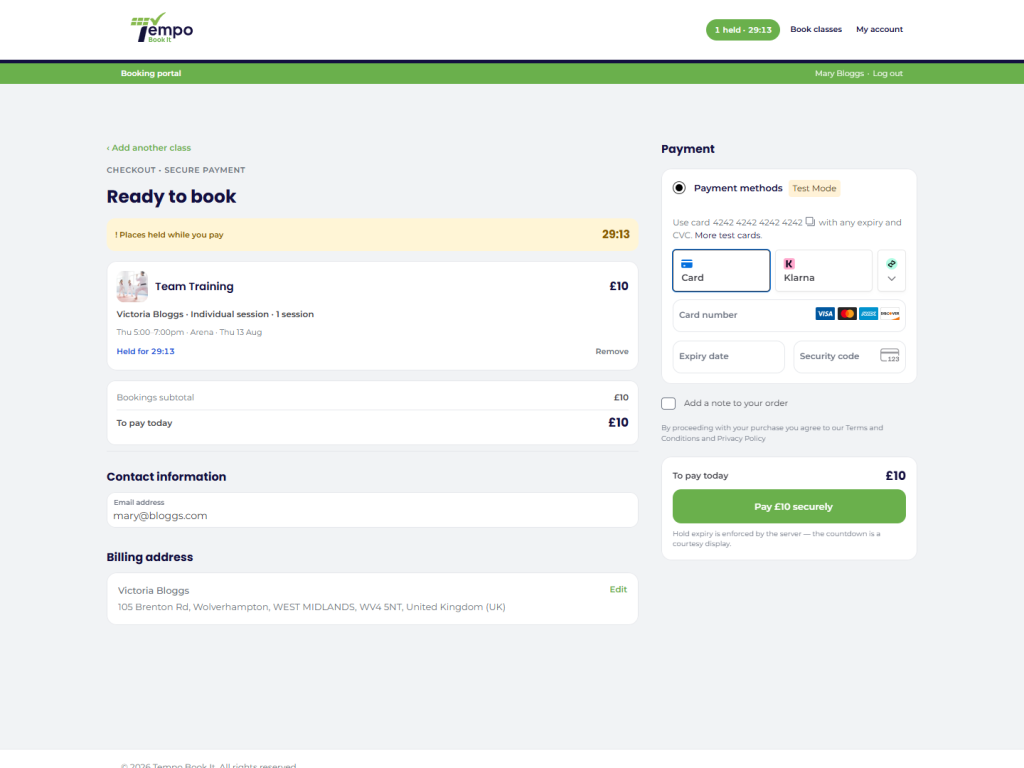
The credit then sits on the family account, visible to the parent in My Account, and at the next booking it is applied at checkout, automatically if the club switches auto-apply on. For most families the entire life cycle of a cancellation is: an email saying credit has been added, and a slightly cheaper checkout three weeks later. No forms, no waiting for the card refund, no conversation at all. The relationship stays warm because there was never a transaction to be suspicious of, just money that stayed exactly where the family already intended to spend it.
The club, meanwhile, keeps the cash and keeps the family. A refund is a small goodbye; credit is a see-you-next-term.
The machinery that keeps it fair
Clubs have been burned by loyalty-point-style credit systems before, so it is worth being precise about how ours works. Credit lives in an append-only ledger: entries are added, never edited and never deleted, so the history of every pound can always be shown. Credit is issued in lots with an expiry date, twelve months by default, and when a family spends credit the soonest-expiring lot is spent first, which is the outcome a fair-minded human would pick by hand. Before anything expires, automated reminders go out, because credit that quietly evaporates is not friendliness, it is a trap with a nice name.
Double compensation is impossible by design. If a paid order is later cancelled or refunded, credit that came from it is automatically clawed back once, and only once; nobody can end up with both the money and the credit, and no admin has to spot it manually. Every issue, spend, extension and reduction is audited with who did it and why. Reports show credit issued, used, expired and, importantly for the treasurer, the outstanding credit liability, so "how much do we owe families in credit?" is a number on a screen rather than an afternoon with a spreadsheet.
When someone still wants the money back
Credit is the default, not a wall. Some situations deserve a refund: a family leaving the club, a house move, a booking made in error. Tempo Book It supports that with a deliberate two-step refund recording flow for staff, which cancels the booking, blocks any double compensation, and hands the actual money movement to WooCommerce and your own card processor. The point of the design is not to make refunds impossible; it is to make credit so easy and so obviously fair that refunds return to being what they should be, the exception for genuine departures rather than the default admin chore of every wet Tuesday.
Parents can help themselves, too. Within the club's cancellation deadline a parent can cancel a single session online and receive the credit with no office involvement at all, and a parent who merely reports an absence keeps the place while the register gets flagged for the coach. Each family chooses, and neither choice generates an email for the office.
Cancelling a class without lighting a fire
When the club itself cancels a session, the tone of the announcement matters as much as the money. So nothing auto-sends: the office previews the notice, adds a human message ("sorry everyone, the boiler has finally died"), chooses the outcome per student, credit for most, leave pending or move for special cases, and then sends one email to every affected family. Money handled, message handled, all in one screen, all recorded.
The pattern underneath all of this is simple. Fee conversations turn unfriendly when the arithmetic is disputable and the process is manual. Make the arithmetic exact and the process automatic, and there is remarkably little left to argue about. The families keep their money's worth, the club keeps its cash flow, and the inbox goes quiet on the subject, which, if you have ever run a club through a wet February, is the friendliest outcome of all.
Be the first to comment Hide comments