

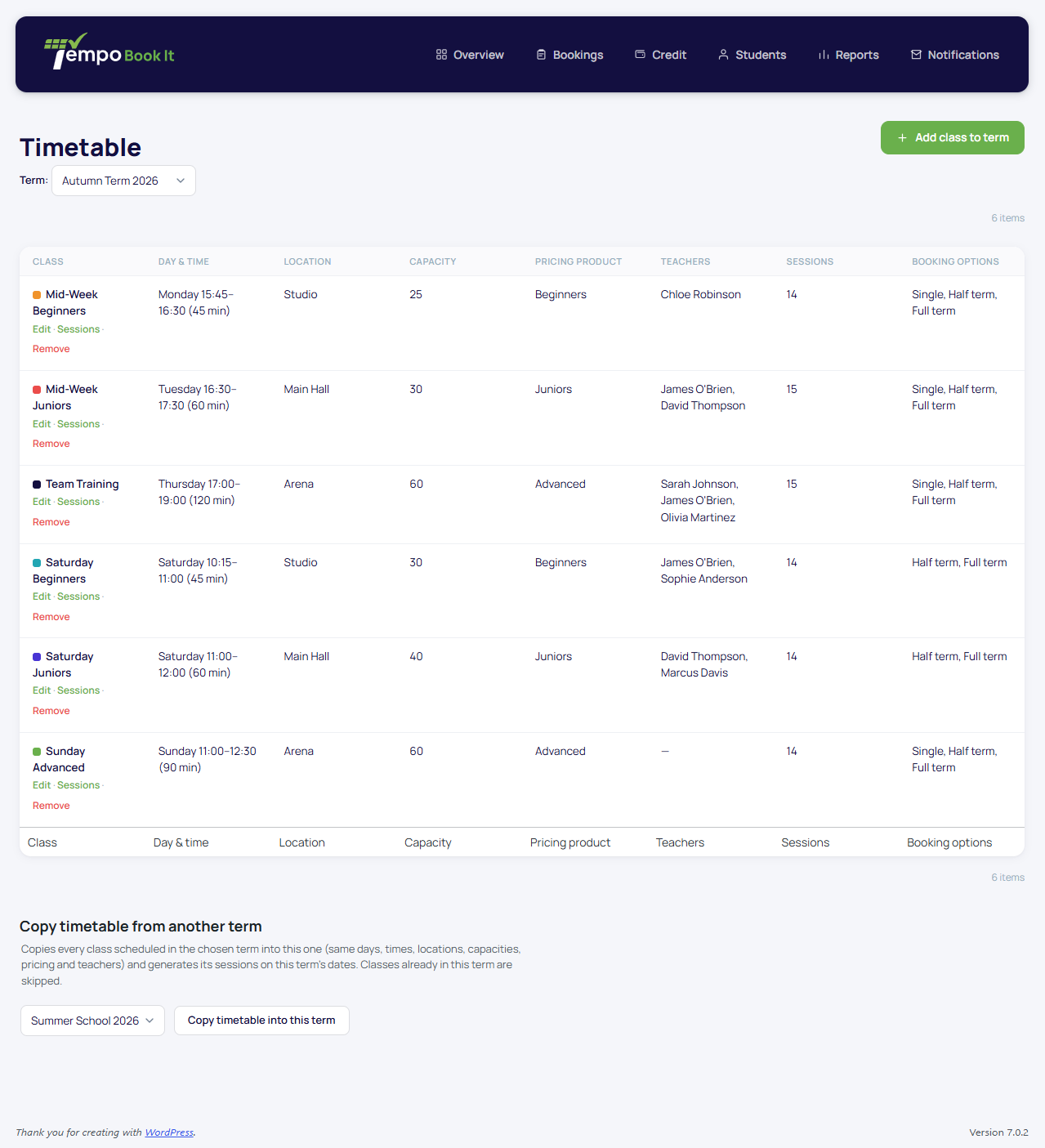
Ask any club owner when bookings go wrong and the answer is rarely week three of a normal term. It is the week after half-term, the bank holiday Monday, the show week when the studio is a theatre. A term is never just twelve tidy weeks, and a booking system that assumes it is will charge parents for classes that never run.
This guide walks through setting up a real term in Tempo Book It: the breaks, the odd Mondays, and the prices that follow along on their own.
Start with the dates you cannot move
School half-terms, bank holidays and your own closures go in first. Tempo treats a term as real calendar dates with breaks inside it, not a count of weeks, so a Monday class in a term with two Monday holidays simply has two fewer sessions. The price of every package updates to match; nobody pays for the 4th of May.
Let the packages do the maths
Once the term knows its own shape, packages price themselves from the sessions that actually run. A full-term package for a class with eleven real sessions costs eleven times the session rate, minus whatever package saving you set. Join late and the same rule applies from the next session, so mid-term joiners see a fair price without you touching a calculator.
Sarah, SJP Theatre ArtsThe half-term thing sounds small until you have refunded forty parents by bank transfer. Now the term just knows. That one feature paid for the licence on its own.
A checklist before you open bookings
Five minutes with this list saves a term of apology emails:
- Breaks entered, including any inset days your venue takes
- Bank holidays checked against each weekday class
- Session counts on each class match your paper diary
- One test booking made as a parent, start to finish
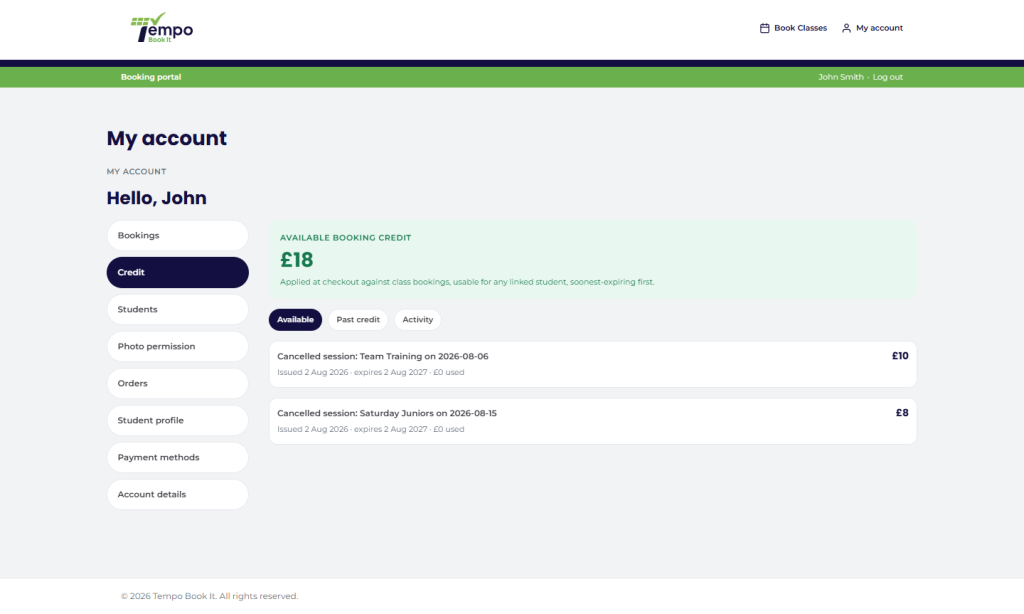
If a date changes mid-term, edit the term and Tempo recalculates what is owed, issuing credit where a session disappears. The audit trail keeps a record of every change, so the treasurer stays happy too.
Be the first to comment Hide comments