

Every so often a club owner asks us, usually a little suspiciously, why Tempo Book It costs a flat amount per year when every booking platform they have looked at charges a small percentage of each booking instead. Surely a percentage is fairer? You only pay when you earn?
It sounds fair. We think the maths, and the incentives behind the maths, tell a different story. This post is the honest version of why we chose a licence.
How platform pricing actually works
Most club booking platforms charge in two parts: a monthly subscription, and a transaction fee on the bookings themselves, commonly in the region of 2.5 per cent once card processing is included. The subscription is visible. The transaction fee is nearly invisible, because it is skimmed from each payment before the money reaches you, and no single skim ever feels like much. Fifty pence here, a pound there.
The trouble is that the percentage is charged on everything, forever. Every term, every sibling, every returning family you have already won pays it again. And because it scales with your revenue, the fee quietly grows every time your club does.
The maths, worked through
Take a club putting £50,000 a year through its booking system. That is not a big club: a couple of hundred children across a few terms will do it. On a typical platform at around £35 a month plus 2.5 per cent of bookings, that club pays roughly £420 in subscription and about £1,250 in transaction fees. Call it £1,600 or more a year, and the figure rises with every good September.
Now grow. At £80,000 of bookings the same club is paying £2,400 or more a year. Nothing about the service changed. The club simply got better at the thing it exists to do, and the platform's invoice grew with it.
Tempo Book It costs £249 a year, self-managed, whatever your volume. A £20,000 club and an £80,000 club pay the same, because we do the same work for both: we build, maintain and support the software. Your card processor still charges its normal rate, exactly as it would charge anyone taking card payments, but that relationship is yours, not ours, and we add nothing on top. The bigger your September gets, the better the comparison gets.
The incentive problem
Pricing is not just arithmetic. It shapes how a company behaves, because a company pays attention to whatever makes it money.
When a platform takes a cut of every booking, its revenue is tied to the transactions flowing through its pipes. The most valuable thing you can do for that platform is keep transacting on it, which is why leaving is rarely made easy, why your booking pages live on their domain, and why the parents' relationship, the payment flow and the data all sit inside somebody else's walls. None of this makes platform companies bad. It is simply what percentage pricing rewards.
A flat annual licence rewards something else entirely: renewal. We get paid this year, and then we only get paid again if, twelve months on, you look at the software and decide it is still worth having. There is no lock-in doing the persuading for us. The plugin runs on your own WordPress site, payments go straight into your own Stripe or PayPal account, and if you choose not to renew, the plugin keeps working; you just stop receiving updates and support. Our entire business model is clubs choosing, freely, to stay. We think that is exactly the pressure a software company should be under.
"But a percentage means you only pay when you earn"
This is the strongest argument for the other side, and for a brand-new club with almost no bookings it can even be true for a while. A tiny club paying 2.5 per cent of very little pays very little.
Two things are worth knowing before you take that deal. First, the crossover comes sooner than you would expect: with a typical subscription on top, a club only needs modest booking volume before the percentage model overtakes a flat licence, and it never comes back. Second, the deal is asymmetric. The percentage protects you in the years you shrink and charges you in the years you grow, and clubs do not plan to shrink. You are effectively buying insurance against your own success.
Less than £5 a week, fixed, seemed to us like a price a club treasurer could plan around. A percentage of an unknowable September is not a price at all; it is a variable you find out about afterwards.
What the licence pays for
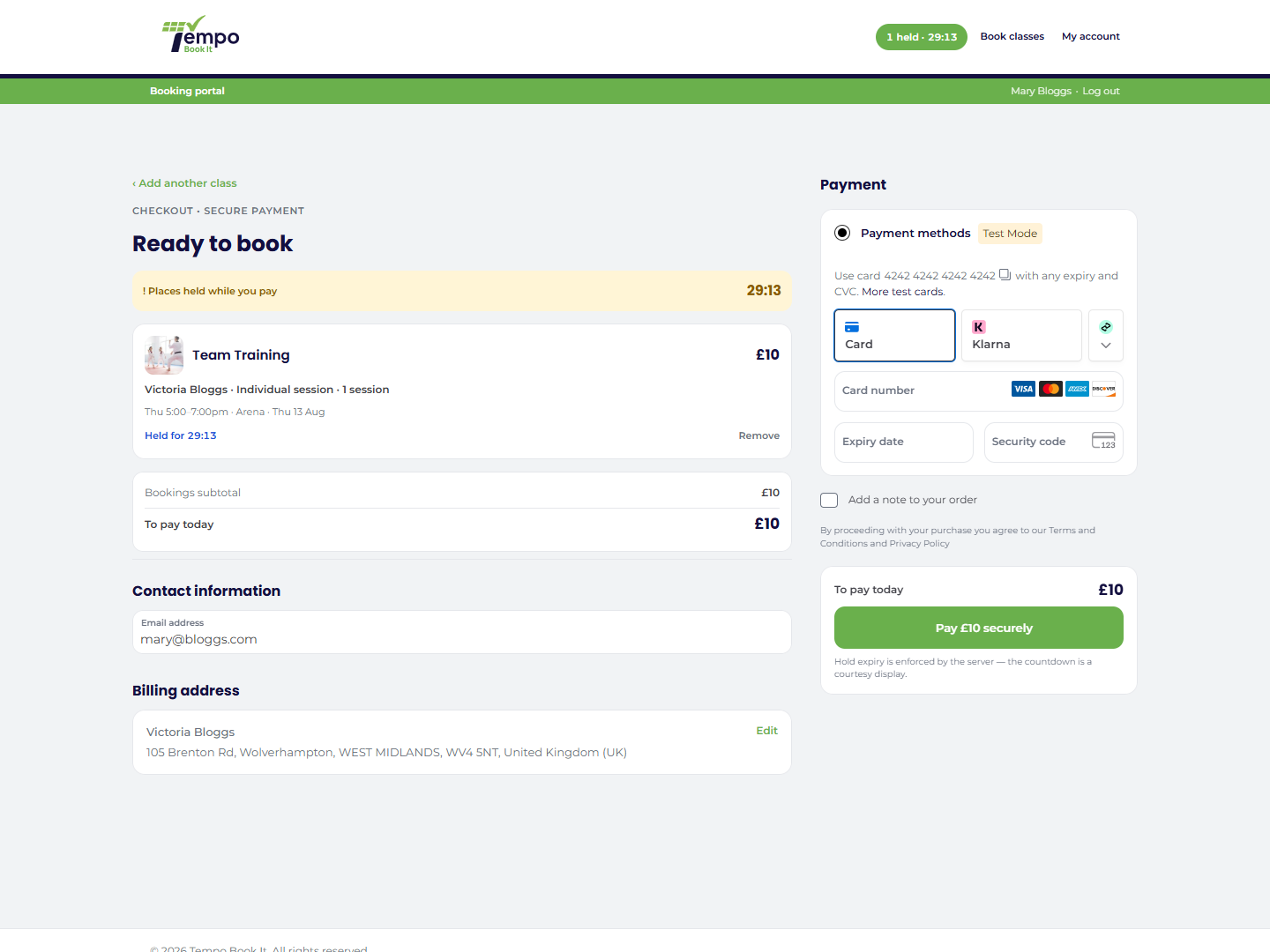
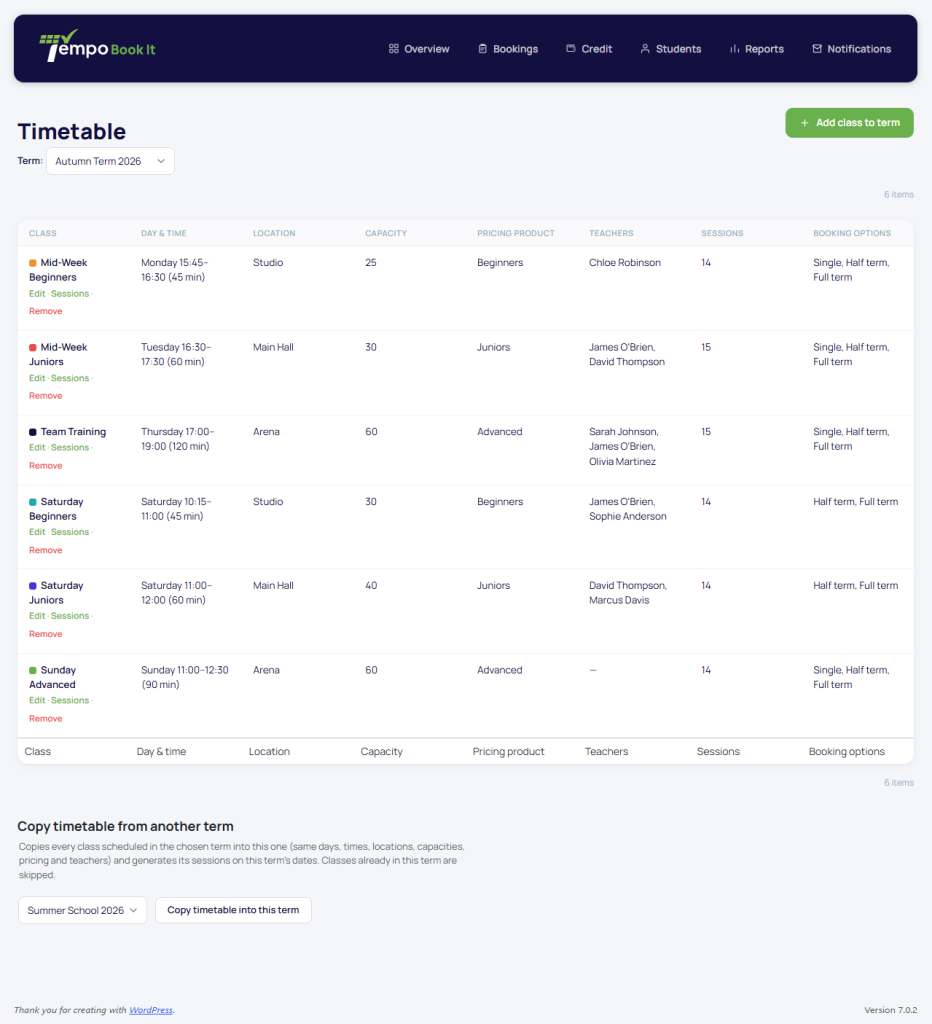
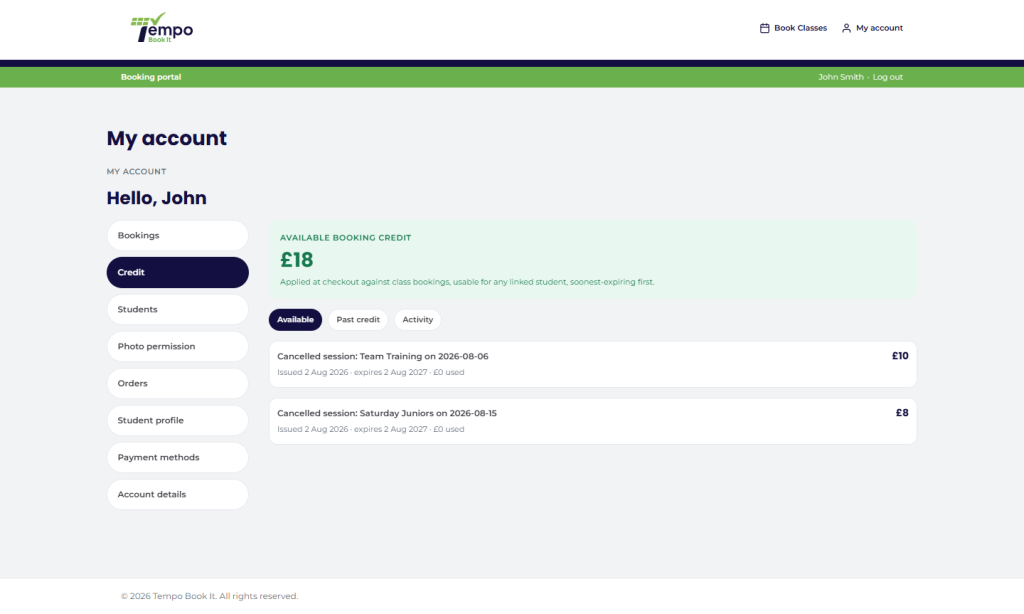
A fair question in return: what do you get for £249 a year? The plugin and its matching theme, ongoing updates, and standard support from the people who wrote it. Everything is included at every tier; there are no per-feature surcharges and no per-booking fees on any plan. If you would rather not do the setup yourself, the Launch tier (£599 in the first year, then £249) has us configure your branding, vocabulary, terms, classes, pricing and emails for you. And if you want nothing to do with running a website at all, Club Partner at £99 a month gives you hosting, a named account manager and the term-to-term admin done for you, which still costs less than what many clubs currently lose to subscription-plus-percentage, with a site the club owns at the end of it.
Where the money conversation ends up
We built Tempo Book It alongside a real school, watching real fees move around: a working dance and theatre school that now runs it in production. Watching a term's income arrive, you learn to respect how hard clubs work for every pound of it. Coaching happens at 6pm in a cold hall; the 2.5 per cent leaves quietly at midnight. It never felt right to us to stand in that stream with our hand out.
So the deal we offer is deliberately simple. You pay a flat licence. Your members' money goes straight to you. And every renewal is ours to earn, not yours to escape.
Be the first to comment Hide comments